Notes from an agricultural frontier
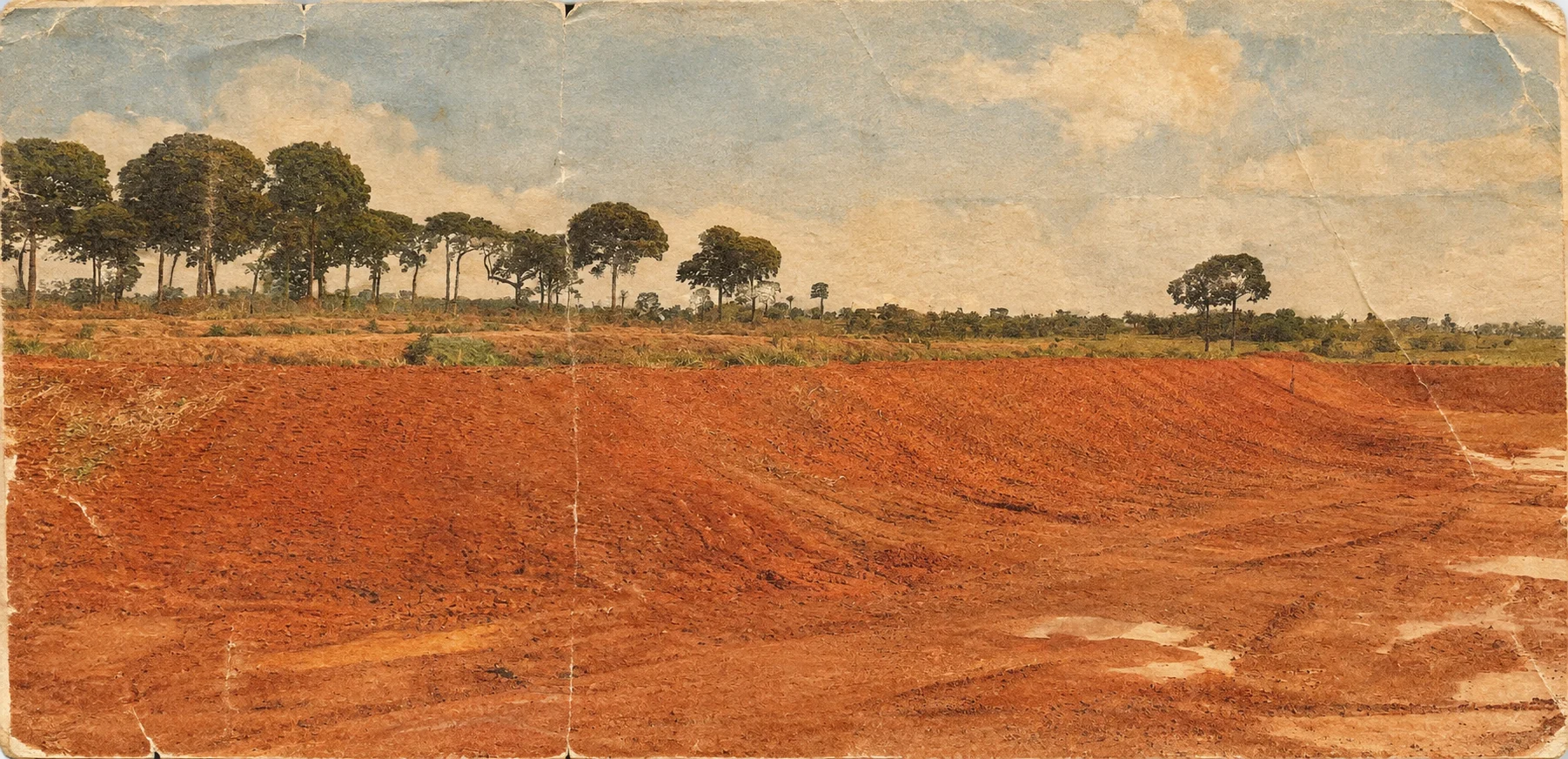
As the bus departs the growing city of Sinop, everything is an expanse of red-orange earth.
Highway BR163 divides the landscape in two. Up and down it's narrow lanes, heaving trucks preciptously overtake each other. Now and then an ambulance cuts through.
Out the window, road construction attempts to force the soil into shape and men in yellow vests survey the work. Then begin the large, empty fields. Impressive, impeccable processing plants with enormous silos; these are the multinationals that export soy, corn and cotton to the whole world. In front of one plant, a small patch of grass is kept alive by a watering system, the only green covering on the ground for miles.
As it gets darker, the processing plants remain lit by insistent white lights. They look lonely. Only fifty years ago this same place must have howled and screeched with the sounds of forest.
'Land without people for people without land'
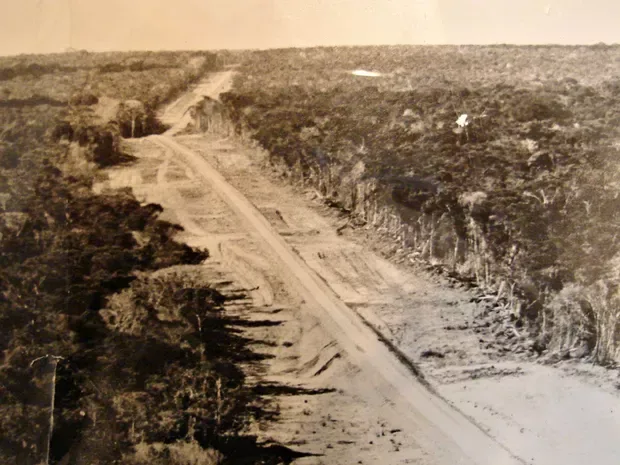
During Brazil's military dictatorship, Amazonian colonization was encouraged under the slogan ‘land without people for people without land’ (uma terra sem homens para homens sem terra). With land conflicts intensifying in southern and northeastern Brazil in the 1960s, the military regime encouraged landless peasants to settle on what was conceptualized as empty land, erasing the presence of existing indigenous populations, small-scale extractivists, riverine communities and other longstanding communities.
On the edge of the botanic garden of Sinop, there is something like a museum.
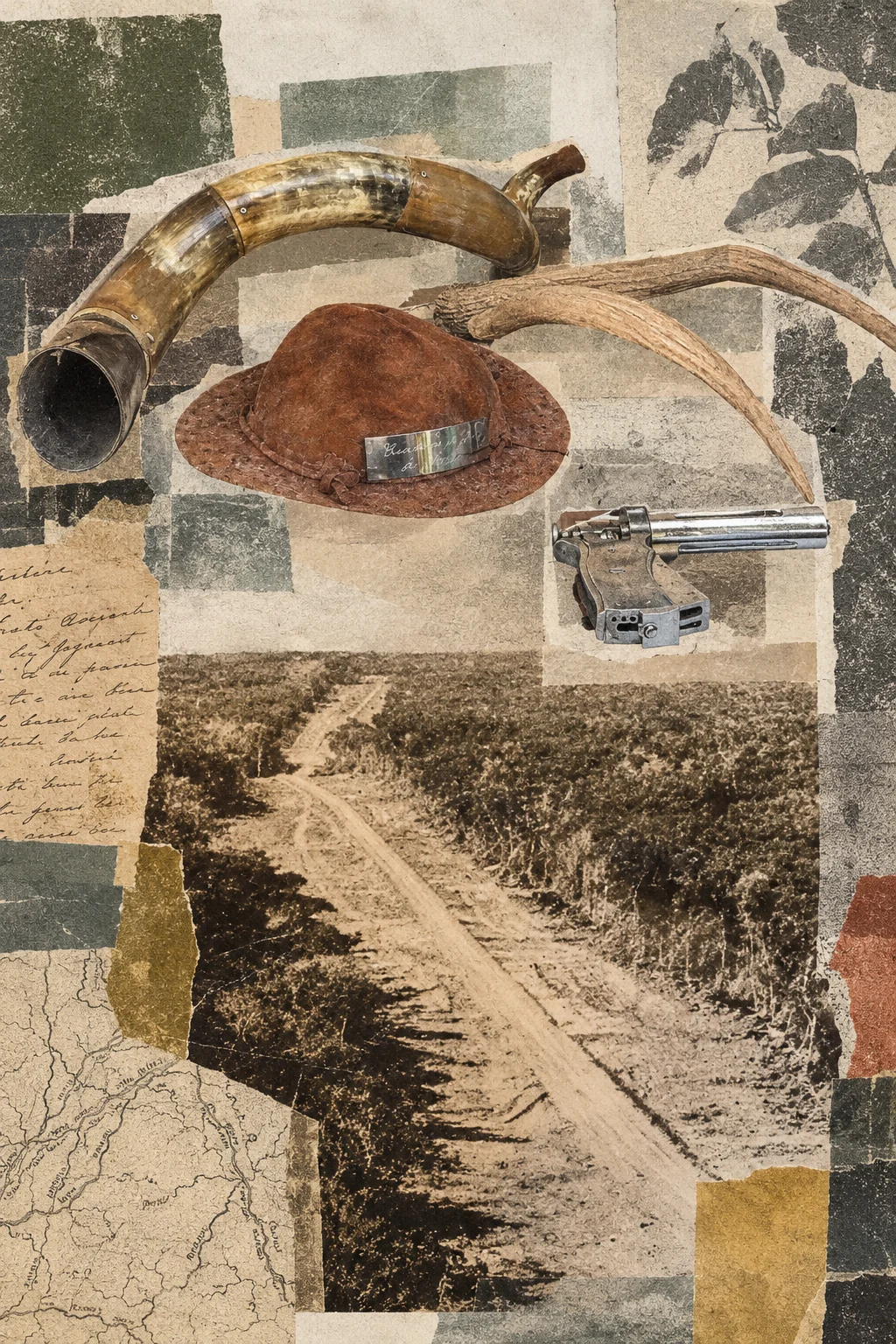
Large windows allow passersby to spy at it’s artefacts, which are displayed simply on wooden tables with small, hand-written labels:
The leather hat of a pioneer of the fazenda Bom Jesus, worn and speckled, next to a stun gun for cattle. An accordion. A topographical instrument, which looks like a maritime navigational tool of early projects of expansion. These are vestigates of a recent colonization, a history so close it barely bears the marks of being faded by time. The Administrative Director of Colonization, one label reads, demarcated the city of Sinop in 1972. It's name is an acronym of a real estate group from the South of the country that initiated colonization: Sociedade Imobiliária Noroeste do Paraná (Northwestern Paraná Real Estate Society).
During the 'march to the west', the state of Mato Grosso was promoted as a no man's land, ripe for occupation and production.
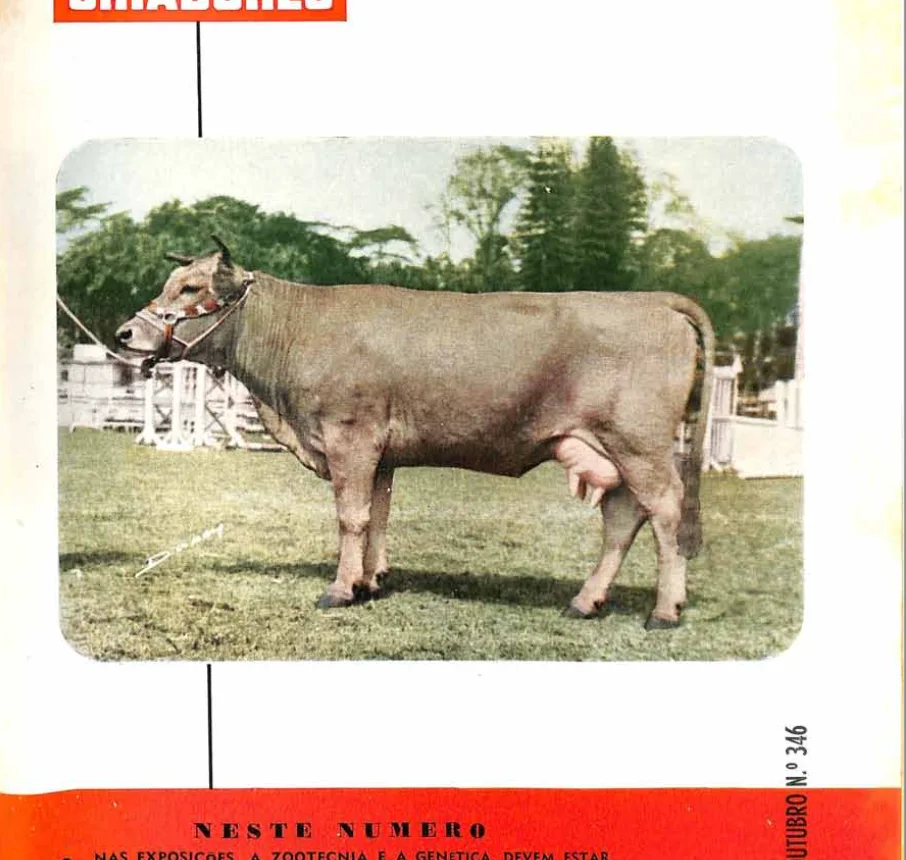
Soon, it would become a region of unprecedented agribusiness expansion. As the National Institute of Colonization and Agrarian Reform moved people into the Amazon, agronomic research explored the production of new agricultural commodities. In this way, expansion into Amazonian states like Mato Grosso coincided with ambitions towards agricultural modernization. Across the world, a global Green Revolution was taking place. Heroic narratives emphasized the urgency of sovereignty, industrialization and stability as fears of world famine and population growth flourished. As a new agricultural economy boomed, land was appropriated, often violently, and transferred to incoming settlers, landowners and agribusiness interests. Forest and savannah became pastures and cropland. Cattle began to populate new open and expansive landscapes.
The native Amazonian trees that had covered Mato Grosso, the state whose name was 'dense forest', grew fewer and fewer.
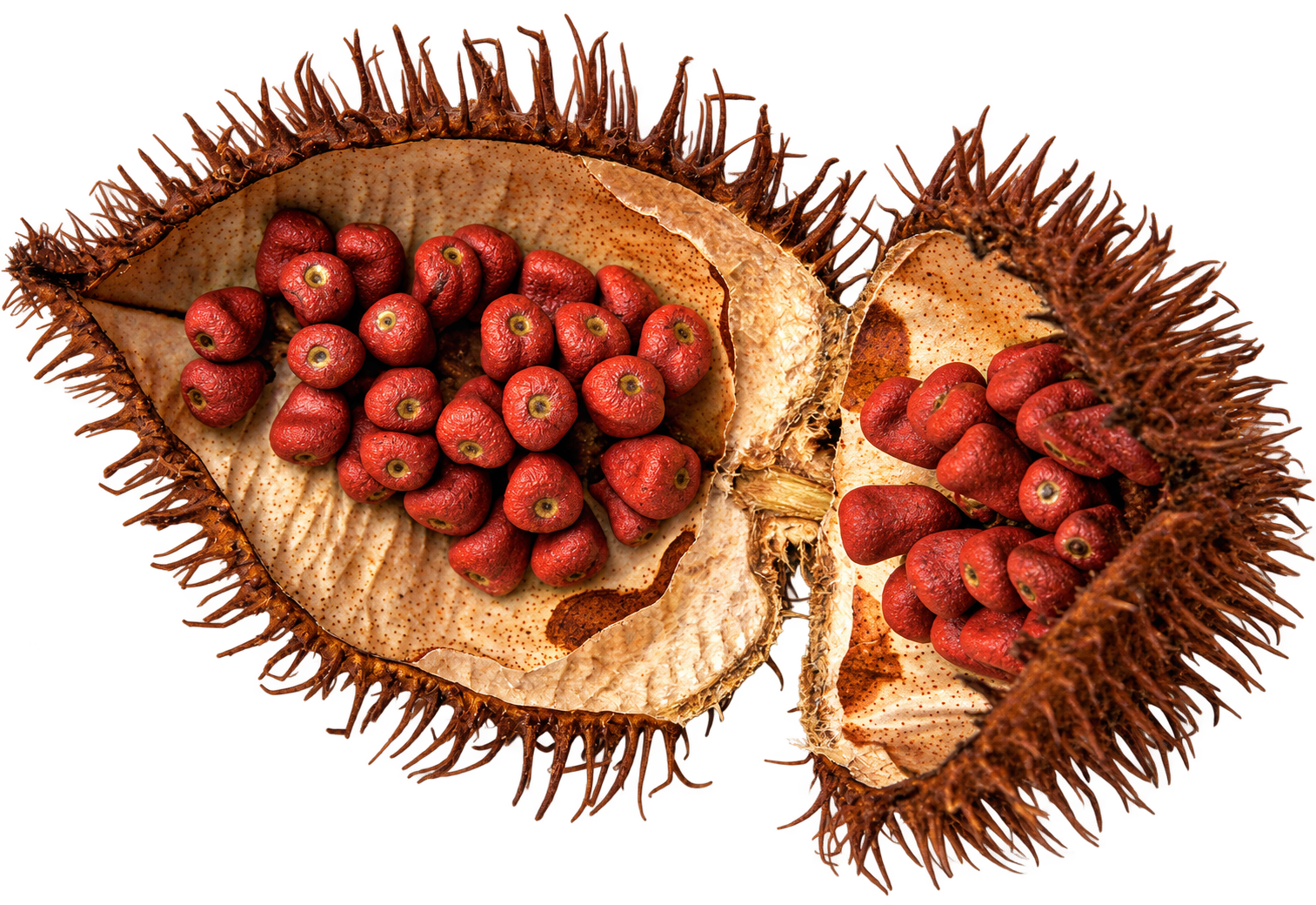
Urucum

Pente-de-macaco

Xixá